

02 | What does pizza have to do with native plants?
Last post, when we got into what "native" actually means, we mentioned a word without really explaining it: ecotype. It’s a concept worth diving into more.
Think about pizza for a second. Pizza is everywhere. Every region has their own style, every town has a favorite spot. And while many will say pizza is pizza, if you ask someone from the South Shore in Massachusetts about bar pizza, or someone from Chicago about deep dish, or someone from New Haven about apizza, you'll probably hear something closer to a defense of their hometown and identity rather than just a description of food.
While the basic idea is the same, dough, sauce, cheese, and standard toppings, each place developed its own version shaped by local tradition, preferences, ingredients, local ovens, and generations of people deciding what tastes right. A New Yorker eating South Shore bar pizza for the first time might not even recognize it as the same category of food (even though it is far superior).
Plants do the same thing, just on a much longer timeline. A species spreads across a wide range, and the population growing in each spot spends generations adjusting to that specific place, its soil, its seasons, its neighbors, until that population becomes its own local version of the species. Botanists call that local version an ecotype.
The differences between ecotypes aren't limited to any one trait either. USDA research on the topic has documented ecotypes varying in plant height, growth habits, maturation dates, leaf appearance, and reproductive habits, depending on the region a population grew up in. Take sideoats grama, a native grass found across a huge range. Northern populations flower earlier and grow shorter than southern ones, adapted to a shorter growing season.
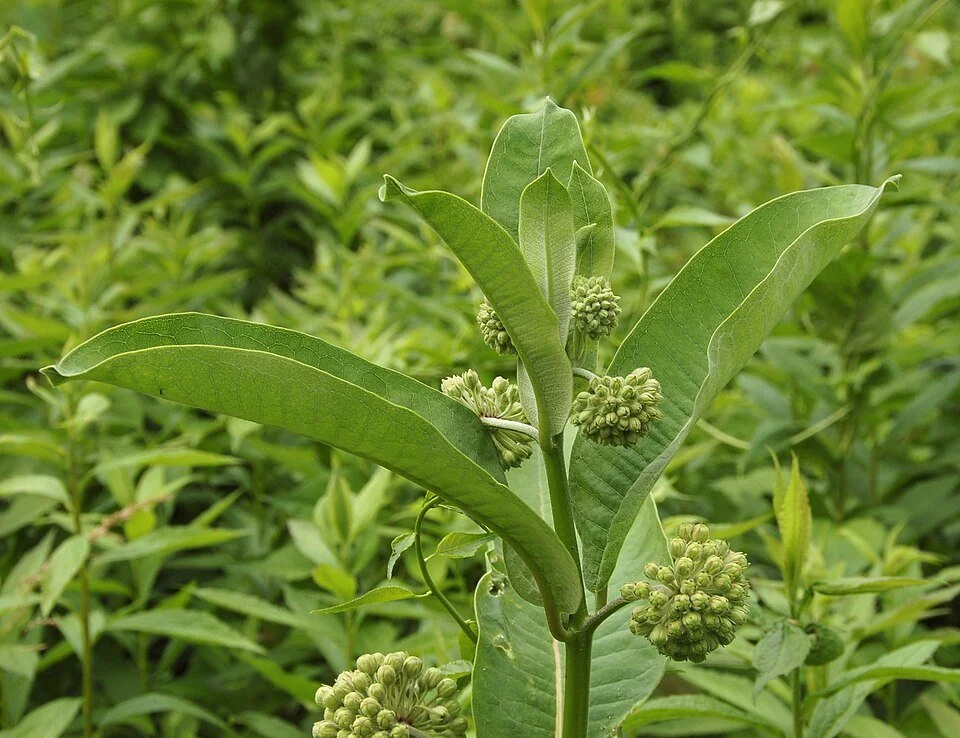
Photo by Derek Ramsey (Ram-Man), GFDL 1.2, via Wikimedia Commons
We touched on this with milkweed in the last post, and it's worth getting specific about what actually differs. Research comparing common milkweed seeds by latitude found that northern populations germinate faster, produce larger seeds, and need less cold exposure before they'll sprout, compared to southern populations of the same species. The researchers traced this to growing season length rather than temperature alone: plants from short-season climates like Maine's are built to get up and growing fast, because they don't have a long window to work with. Plant Texas-sourced milkweed here and the species checks out as native. But it’s internal clock, tuned to a much longer growing season, might not. That’s because it wouldn’t be a “local ecotype plant of Southern Maine.
That kind of mismatch has real consequences for the ecosystem. Local insects didn't evolve around a species in the abstract. They evolved around the specific population growing in their specific area, tuned to its particular rhythm, when it germinates, when it flowers, how it responds to the local season. A plant that's technically the right species can still be running on the wrong clock for the insects that depend on it.
This is why when we source plants for Wild Heart installations, we try to get as close as we can to plants that grew from local seed. It's a harder standard to meet, but it's the standard that actually does what native planting is supposed to do: feeding, supporting, and providing habitat for local insects and wildlife on the schedule they need to thrive.
None of this is meant to make you feel like your garden needs a passport check. If local ecotype seed isn't available for a plant you want, a native grown from seed sourced somewhere else in its range is still a massive upgrade over a non-native ornamental. Research on caterpillar counts backs this up in a big way. Native oaks can host over 500 species of moths and butterflies. Non-native ornamental plants in the same studies often hosted one caterpillar or none at all. A milkweed from the wrong ecotype still carries the chemistry and species-level relationships that make it recognizable to monarchs and plenty of other insects. Local ecotype is the gold standard, but reaching for any native, wherever the seed came from, still does real work for your local ecosystem.
So next time someone tells you a plant is native, it's worth asking one more question. Native to where, exactly, and grown from what? Because just like pizza, the difference between the real local thing and a version from three states away really matters.
